
Blog

5 Amazing Features of the 2024 Ford F-250

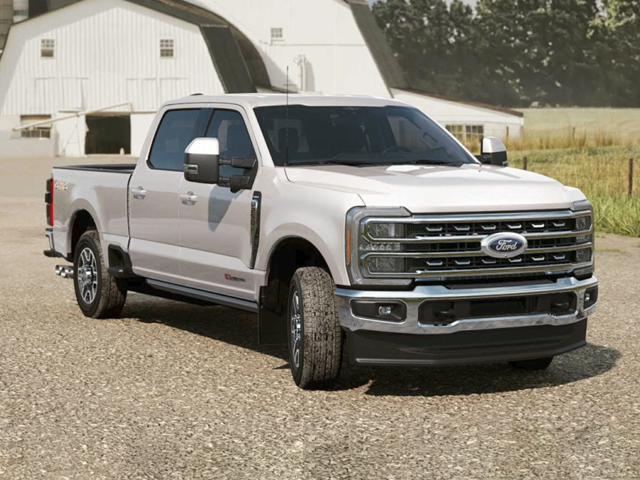
The 2024 Ford F-250 offers serious towing and hauling capacity and is perfect for big jobs. It also offers a spacious cab and tech features that make jobs easier and entertain you on the road. If you're looking for a heavy-duty truck, you'll want to check out the F-250 Mission Valley Ford Trucks.

1. Capacity for Big Jobs

The F-250 comes with three different powertrains, each of which involves a V-8 engine. Depending on which engine you go with, you'll have either 400, 430, or 475 horsepower. All of those ponies add up to serious capacity. The F-250 has a maximum payload capacity of 8,000 pounds, and when it comes to towing, the F-250 can pull up to 13,700 pounds with a traditional setup or up to 40,000 pounds with the gooseneck configuration.

2. Cargo Bed Built for Work

The cargo bed of this truck is available in two different lengths and, depending on which trim level you opt for, may come with standard features like tie-down hooks, LED bed lighting, and steps that are molded into the truck's body. Additional features are available, including bed liners, retractable side steps, and more. Each feature is designed to help you to make efficient use of your cargo bed.

3. Technology of All Types

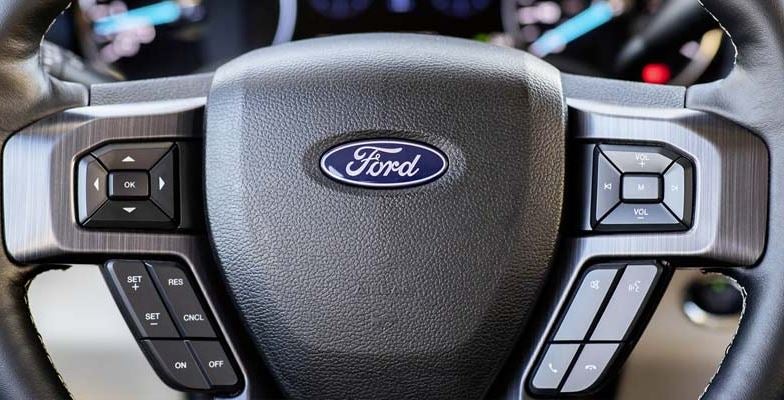
Each Ford F-250 comes with an infotainment touchscreen and an optional 12-inch digital gauge cluster. Tech features like remote start and a wireless phone charger are available, and all models come with a Bang & Olufsen stereo system.

This truck also has several technology features that assist with towing, including a blind-spot monitor that's helpful for trailers as long as 33 feet long. Pro Trailer Hitch helps with backing up to hitch a trailer, and Pro Trailer Assist helps with maneuvering when a trailer is already hitched.

4. Comfortable Cab

Three different cab configurations, including a four-door SuperCrew cab, are available. You'll find plenty of storage cubbies in the cab, and a tray folds out of the center console and swings around to serve as a desk for either of the front seats. The front seats can be folded nearly flat to make space for a sleeping area.

5. Power on the Go

The available Pro Power Onboard feature offers up to 2 kW of power, which is enough to fire up an air compressor or saw. This feature is perfect for job sites, campsites, or other locations where power outlets are hard to come by.

The F-250 is a versatile truck capable of handling anything you throw its way. When you're ready to test drive this vehicle, come see us at Mission Valley Ford in San Jose, CA.
Recommended Posts

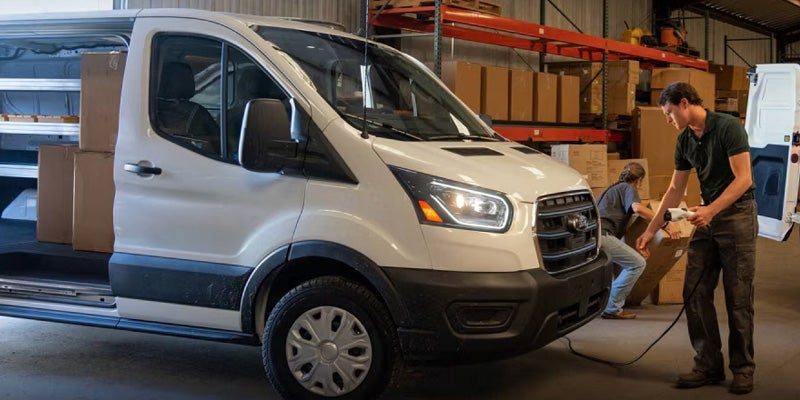
White Ford Transit van being loaded with equipment in a warehouse.

Choosing a Ford Transit® in San Jose Starts with the Work

A commercial van earns its keep by carrying the people, tools, materials, or equipment that make a business run. The 2026 Ford Transit® gives San Jose companies plenty of ways to build around that job, with T-150, T-250, T-350, and T-350 HD configurations, multiple body lengths and roof heights, 2 gas V6 engines, and RWD or available AWD. Cargo capacity can reach 487.3 cu. ft., maximum payload can reach 5,103 lbs., and properly configured gas models can tow up to 6,900 lbs. First, Figure Out What Has to Fit Inside Transit® Cargo Vans come with low, medium, and high roofs and 129.9-inch or 147.6-inch wheelbases, depending on configuration. Overall length starts at 219.9 inches for regular models, reaches 237.6 inches in long configurations, and stretches to 263.9 inches for high-roof extended vans. Cargo volume ranges from 246.7 to 487.3 cu. ft. behind the front seats. A low roof can be easier to live with when San Jose parking structures are part of the route. Medium and high roofs provide more vertical working room for shelving, tools, inventory, and vocational equipment. The correct choice starts with what goes inside the van, not what looks impressive on a specification sheet. T-250 Is the Middleweight That Can Carry Its Share The Transit-250 occupies useful territory between the T-150 and heavier T-350 configurations. Complete-vehicle Cargo Van versions can reach a 9,150-lb. GVWR, with regular and long wheelbases and several roof heights available depending on body configuration. Buyers can also choose RWD or available AWD. For plumbers, electricians, contractors, delivery operations, and mobile-service businesses, T-250 can provide additional capacity for equipment and an upfit without automatically stepping into the highest weight ratings. That's important because commercial vehicles aren't trophies. Capacity earns its place when you're putting it to work. Two V6 Engines, Depending on How Hard You Ask Gas-powered Transit® models offer a 3.5L PFDi V6 producing 275 hp and 260 lbs. ft. of torque or an available 3.5L EcoBoost® V6 with 300 hp and a considerably stronger 400 lbs. ft. of torque. Both pair with a 10-speed automatic transmission, with RWD standard and AWD available. There is no plug-in hybrid Transit® in the U.S. lineup. Businesses interested in electric power can instead consider the E-Transit™, which uses a rear-mounted electric motor producing 198 kW and an 89-kWh battery. Choosing among them should come down to routes, loads, operating needs, and how the van will spend its working hours. A Work Van Should Be Set Up for Work An empty cargo area isn't much help if employees spend every morning digging through it for tools. Ford offers commercial packages designed around specific jobs, including Electrician Trade, General Contractor, Builder's Prep, Upfitter, Wall Liner, and Heavy-Duty Trailer Tow packages. Depending on configuration, these can provide a foundation for shelving, partitions, storage, electrical equipment, and other vocational hardware. Properly equipped gas Transit® models can also tow up to 6,900 lbs. A good upfit isn't decoration. It's about giving tools and equipment a place to live so the person doing the job can spend less time searching for them. Decide if You're Carrying Equipment or People Cargo Van models concentrate on 2 front occupants and working space behind them. Transit® Passenger Vans take a different assignment, with configurations for 12 or 15 passengers. That makes the distinction refreshingly straightforward: tools, deliveries, and mobile operations point toward Cargo Van, while businesses transporting groups should look at Passenger Van configurations. Standard driver-assistance equipment includes Pre-Collision Assist® with Automatic Emergency Braking, Forward Collision Warning, Lane-Keeping System, and Auto High-Beam Headlamps, adding useful support during the miles between jobs. Put the Right Transit® to Work in San Jose Payload, cargo dimensions, roof clearance, drivetrain, towing requirements, and the planned upfit should decide what belongs in your fleet. San Jose businesses can visit Mission Valley Ford Trucks to compare available Ford Transit® inventory, commercial configurations, and upfit options around the work they perform. Once you've narrowed down the van that fits the job, schedule a test drive online.

Rear view of a Ford pickup truck with a bed cover.

New Ford Fathom™: What We Know So Far

Ford is taking a different swing at the electric truck with the new Ford Fathom™. Due in 2027, it’s a midsize EV pickup built on Ford’s new Universal Electric Vehicle Platform. That price is going to get attention. The bigger question is how much truck Ford can deliver for it. We don’t have every answer yet, but the details Ford has released give us a decent idea of what the Fathom™ is supposed to be. A New Kind of Ford EV The Fathom™ will be the first vehicle built on Ford’s Universal Electric Vehicle Platform. Rather than adapting an existing gas-powered vehicle for an electric drivetrain, Ford developed this architecture specifically for a new generation of more affordable EVs. Ford hasn’t released horsepower, torque, battery capacity, EPA-estimated range, charging speed, towing capacity, or payload figures yet. Those are some pretty big blanks for a pickup, so there’s still a lot we need to learn before judging its capability. We do know Ford is aiming for more interior room than its midsize dimensions might suggest. The company projects the Fathom™ will have more passenger volume than the Toyota RAV4. For drivers around San Jose, CA who want a truck without dealing with full-size pickup dimensions every day, that could be one of its strongest selling points. Plenty of Technology Comes Standard Ford isn't treating the lower starting price as an excuse to gut the cabin. Every new Ford Fathom™ will get a large touchscreen with navigation powered by Apple Maps, along with Apple CarPlay® and Android Auto™ compatibility. Digital Key will allow a compatible device to serve as the vehicle key, and owners will be able to access connected functions remotely through the Ford app. The Fathom™ will also be BlueCruise capable. Ford describes it as next-generation BlueCruise capability, although we’ll have to wait for more information about exactly what changes or improvements that brings. Bidirectional Power Could Be a Big Deal One of the more interesting, confirmed features has little to do with the touchscreen. The Fathom™ will support bidirectional power, meaning its battery won’t only take electricity in. It will also be able to send stored energy back out for compatible uses. Ford hasn’t released output figures or all the details about what equipment will be required. Still, there’s obvious potential here. Portable battery power could come in handy at a jobsite, campsite, tailgate, or anywhere else you’d rather not drag along a separate generator. That feature makes sense on a pickup. It turns the battery into something useful even when the truck isn't moving. What We Still Need to Know There are a few numbers that will ultimately decide how good this truck is. Range is an obvious one, especially for California drivers covering longer distances. Charging speed matters nearly as much. Truck buyers will also want firm towing and payload ratings before deciding if the Fathom™ can replace their current pickup. Then there's the standard-range battery itself. Until those details arrive, it's better to think of the Fathom™ as promising rather than proven. The New Ford Fathom™ Arrives in 2027 Preorders are expected to open in early 2027, with more specifications likely to arrive as launch gets closer. Drivers around San Jose, CA, can visit Mission Valley Ford Trucks to learn more about Ford's current truck and EV lineup and keep up with new Fathom™ availability. Once we have the range, charging, towing, and payload numbers, we'll have a much clearer idea of what Ford's affordable electric truck can really do.

White Ford pickup truck driving through a dusty off-road trail.

Best Ford Chassis Cab and Upfit Options for Construction Companies

When you run a construction business, your vehicles need to do more than just move gear from one job site to the next. You need a platform that can be customized to match your exact workflow. That is exactly where a Ford chassis cab comes in. Unlike a standard pickup, a chassis cab gives you a cab and frame without a factory-installed bed, leaving the rear of the truck open for purpose-built equipment. For construction crews in San Jose, CA, that kind of flexibility can make a real difference in day-to-day operations. more Understanding the Ford Super Duty Chassis Cab Platform The Ford Super Duty lineup is the foundation for most heavy-duty work truck builds. The Super Duty earned recognition as the No. 1 heavy-duty truck for new-vehicle quality according to J.D. Power. A Ford chassis cab version of the Super Duty, available in configurations like the F-350, F-450, F-550, and F-600, provides a rugged frame designed to handle demanding payloads and upfits. These trucks are built with the strength and engineering needed to support specialized bodies and equipment. Popular Ford Upfit Options for Construction Use One of the biggest advantages of choosing a Ford chassis cab is the wide range of upfit options available. Depending on your trade, you might consider a flatbed body for transporting materials and equipment, a service body with lockable compartments, a dump body, or a crane or mechanics body for on-site maintenance and repairs. Each of these options can be installed by a certified upfitter and tailored to meet the specific demands of your job. The result is a truck that is configured exactly the way your crew needs it, not just a generic vehicle you have to work around. Choosing the Right Chassis Cab Configuration Selecting the right Ford chassis cab starts with understanding your payload and towing requirements. The F-350 is a strong choice for lighter commercial applications, while the F-550 and F-600 step up to handle heavier loads and larger upfit bodies. Cab style, wheelbase length, and rear axle configuration all play a role in determining which build is right for your operation. It is worth working closely with a knowledgeable dealer who understands commercial vehicle needs to make sure you land on a configuration that fits your workload without overbuilding or undersizing your truck. Ford Technology That Supports Jobsite Productivity Ford chassis cabs are not just built tough - they also come equipped with technology that helps keep your crew connected and productive. Available features like Ford Co-Pilot360® technology provide driver-assistance tools that can help reduce accidents on busy job sites and during long hauls. An available in-vehicle Wi-Fi hotspot keeps your team connected whether you are on-site or on the road. These tech features, combined with the durability of the Super Duty platform, make a strong case for building your construction fleet around a Ford chassis cab. Visit Mission Valley Ford Trucks for Your Next Work Truck If you are ready to explore Ford chassis cab options for your construction business, the team at Mission Valley Ford Trucks is here to help. If you are outfitting a single truck or building out an entire fleet, you can browse available inventory, explore Ford upfit options, and find the right Super Duty configuration to get the job done right. Visit missionvalleyford.com to get started and see what is available for drivers and business owners throughout San Jose, CA.